Seattle Children's Hospital
Where'd You Go BernadetteSeattle Children's Hospital is the setting of Bee Branch's prolonged early treatment for hypoplastic left heart syndrome and the place her parents return to for annual cardiac checks. In the family’s story, it is both a source of necessary care and a repository of memories that Bee does not share in the same way as her parents: she has little recollection of the illness that shaped their first years together, while ordinary details of the hospital remain vivid to them.
Bee's Early Treatment
Bee was born prematurely with hypoplastic left heart syndrome, a congenital condition that required a series of operations. Her father, Elgin Branch, recalls that her chances of survival were very small at the time and that she was taken for surgery soon after birth. The account also describes a difficult first operation and the family’s uncertainty about whether she would be strong enough for further treatment. These early events form the background to Bee’s first five years, which she spent intermittently at Seattle Children's Hospital.
In a letter opposing Bee’s proposed grade skip, Elgin explains that her heart defect had required six surgeries and that her hospital stays interrupted the ordinary rhythm of early childhood. She entered kindergarten at the expected age despite being exceptionally small. Her parents’ decision not to pursue a gifted-child track was shaped in part by their wish for her to have a measure of normal life after those first years of illness. The hospital’s role in her history therefore reaches beyond treatment: the time spent there influenced how her parents approached her education and what they considered important for her development.
Continuing Care and Different Perspectives
After Bee’s final heart surgery at age five, her family continued to take her to Seattle Children's Hospital each year for an echocardiogram and X-rays. Bee considers these routine checks unnecessary, noting that even her cardiologist appears untroubled by the need for them. Her perspective is sharply different from her parents’: she has been well for nine and a half years and sees the hospital visits as reminders of a past she cannot remember, not as evidence that she remains unwell.
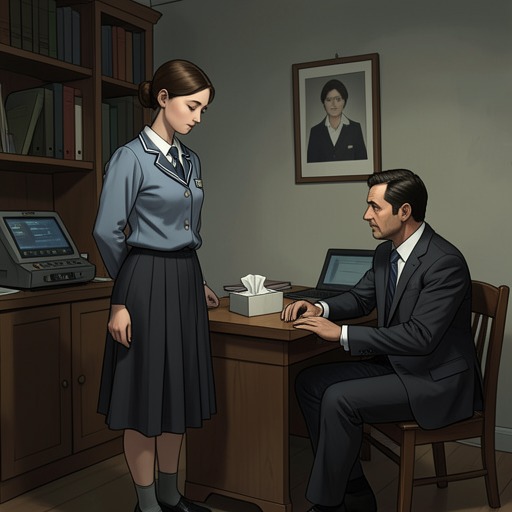
The clinical setting also shapes how Bee is received. Doctors and nurses greet her warmly and show her photographs from infancy, including images of her as a baby in a hospital bed. Their welcome treats her survival as extraordinary; Bee, who has no memory of the operations, cannot understand why she is being celebrated for them. The contrast reveals a lasting difference between medical history and lived memory: the treatment is foundational to her parents and caregivers, while Bee experiences it mainly through other people’s accounts and records.
Bee distinguishes her heart condition from the health issues she experiences in the present. She mentions being short and having asthma that follows illnesses, but says it does not prevent her from dancing or playing the flute and that she barely notices it. Her account resists treating her earlier diagnosis as a complete description of her current life. The hospital’s history remains important, but it does not erase her sense of herself as healthy and active.
A Site of Family Memory
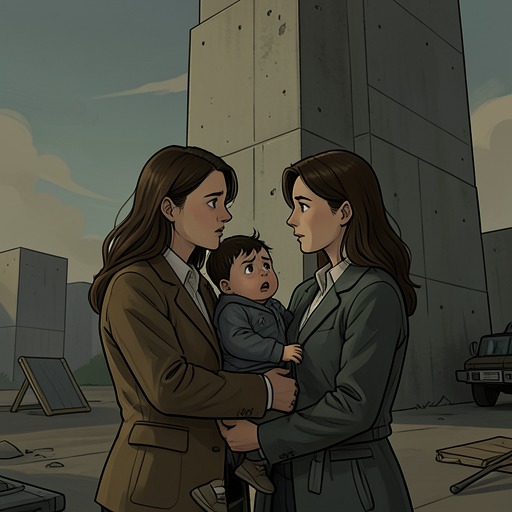
Annual visits bring Bernadette Fox back into memories of Bee’s treatment. As the family walks through the hospital, particular surroundings prompt her to recall the distress of earlier Christmases and other moments from Bee’s care. She sometimes stops and closes her eyes, visibly overwhelmed; Elgin holds her while they pause. These responses show that the hospital carries a history for the parents that is not recreated by the routine nature of the later appointments.
Elgin describes the period of Bee’s recovery as one in which Bernadette devoted herself wholly to their daughter, while he responded by working longer hours and thinking of their arrangement as a partnership. His retrospective account makes the hospital part of the couple’s changing family life as well as Bee’s medical history. For Bernadette, it is associated with the fear and concentration surrounding Bee’s survival; for Elgin, it is part of the period in which each parent adopted a different role in coping with the crisis.
Narrative Significance
Seattle Children's Hospital connects a medical history that Bee cannot remember with the family’s continuing emotional response to it. The recurring checkups place the same people in the same institutional setting, but the significance of those visits differs: Bee sees a healthy present and a past she cannot recall, while her parents encounter reminders of how uncertain her survival once seemed. The hospital consequently serves as a point where care, memory, and family interpretation meet, without making Bee’s congenital condition the whole of her identity.